Evaluating the 03 Online Education PSD Template for Modern E-Learning Designs
In the rapidly evolving landscape of digital education, the visual presentation of your platform is nearly as critical as the curriculum itself. Whether you are launching a new university portal, a niche tutorial site, or a comprehensive course marketplace, the initial impression formed by your website’s design can significantly influence user engagement and trust. This is where specialized design resources like the 03 Online Education PSD Template come into play. It represents a specific approach to web design that prioritizes modularity, modern aesthetics, and adaptability across various educational contexts.
For professionals, designers, and educational administrators evaluating their options, understanding the distinct characteristics of this template is essential. It is not merely a collection of graphics; it is a structured framework designed to streamline the development process. By examining its features, flexibility, and potential limitations, you can determine whether it aligns with your project’s goals or if an alternative solution might better serve your needs.
Core Design Philosophy and Visual Appeal
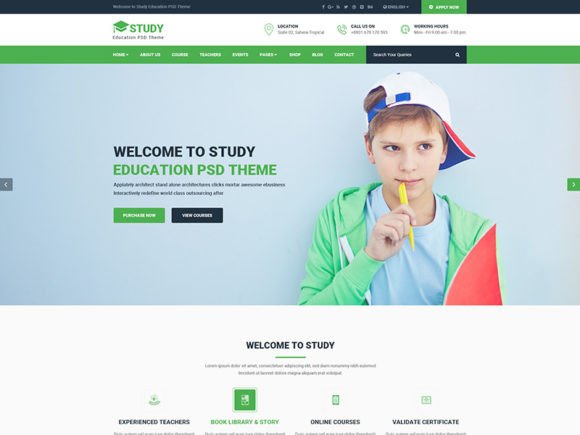
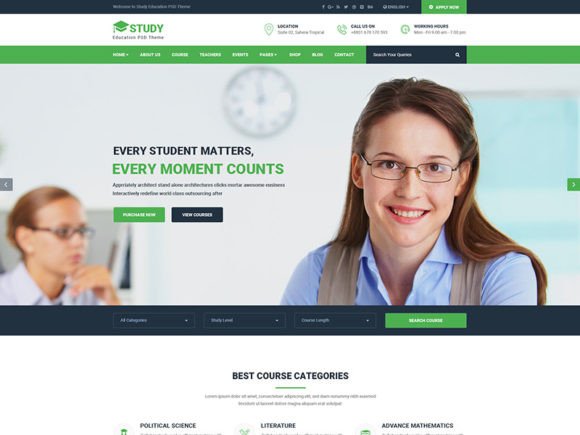
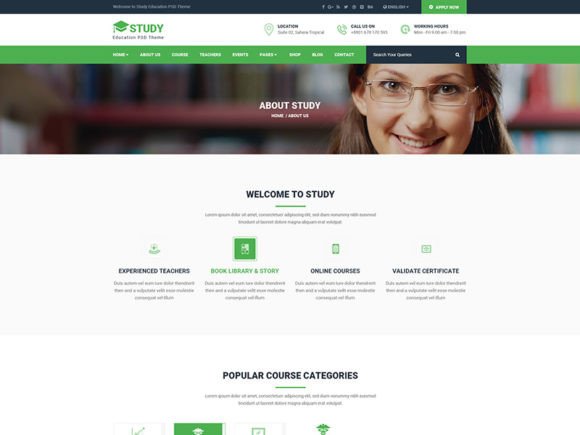
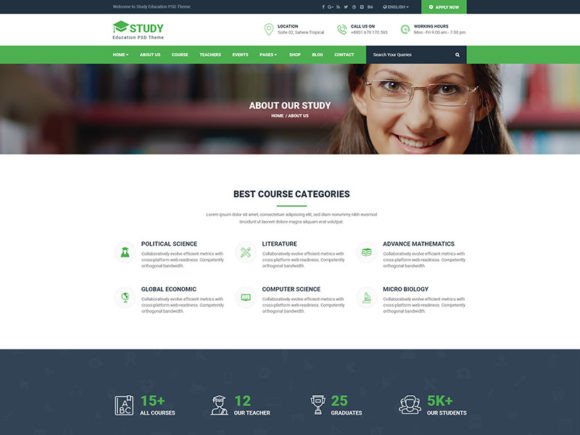
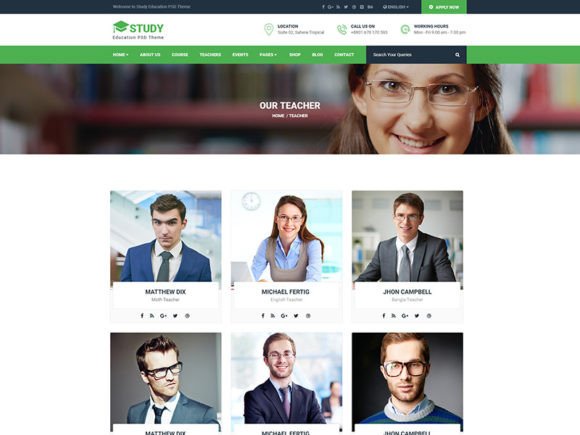
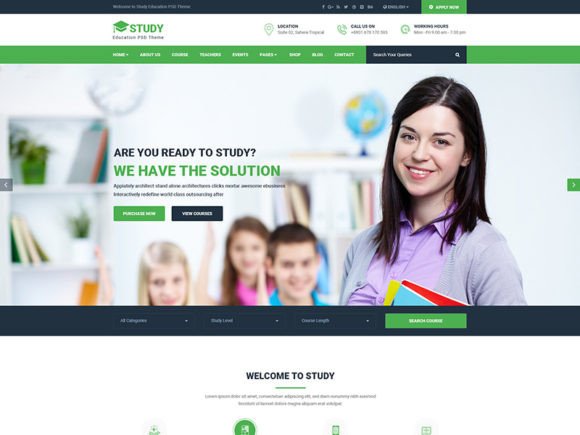
The primary attraction of the 03 Online Education PSD Template lies in its clean, modern design ethos. In the context of online learning, clutter is the enemy of comprehension. Students and visitors need to navigate complex information hierarchies—course catalogs, instructor profiles, enrollment forms, and blog resources—without feeling overwhelmed. This template addresses that challenge through ample white space, clear typography, and intuitive navigation structures.
The design is built with responsiveness in mind, a non-negotiable feature in today’s multi-device world. With a significant portion of learners accessing content via smartphones and tablets, a static desktop-only design is obsolete. This template ensures that layouts adjust seamlessly across screen sizes, maintaining readability and functionality. For decision-makers, this means reduced development time spent on mobile optimization, allowing resources to be allocated to content creation and backend functionality instead.
Furthermore, the inclusion of Google Web Fonts and Fontella Icons enhances the visual hierarchy. These elements are not just decorative; they serve functional purposes by guiding the user’s eye to key calls-to-action, such as "Enroll Now" or "View Course Details." The use of well-organized layers in the PSD files allows designers to tweak these elements without disrupting the overall balance of the page.
Versatility Across Educational Niches
One of the most compelling aspects of this template is its wide spectrum of use. While labeled as an "Online Education" template, its architecture is sufficiently flexible to accommodate various sub-sectors within the industry. This versatility is crucial for organizations that may pivot their focus or offer diverse types of learning experiences.
- Colleges and Universities: The formal layout options can support institutional branding, showcasing faculty research, campus news, and academic departments.
- Private Tutoring and Coaching: The personal touch required for one-on-one tutoring sites can be achieved through the customizable blog styles and profile sections.
- Corporate Training: Companies looking to host internal training modules can utilize the clean interface to present professional development courses without the distraction of overly playful design elements.
- Skill-Based Workshops: For creative or technical tutorials, the large-scale image options allow for high-quality visuals that demonstrate the outcome of the course.
This adaptability stems from the template’s fully customizable nature. Unlike rigid themes that force a specific narrative, this PSD provides the building blocks. You are not locked into a single aesthetic. Instead, you can modify colors, fonts, and layout structures to match your brand identity. This is particularly valuable for established institutions that need to maintain strict brand guidelines while updating their digital presence.
Structural Features and Customization Options
When comparing design templates, the depth of customization options often dictates the final quality of the product. The 03 Online Education PSD Template offers several structural features that facilitate detailed customization.
First, the inclusion of two different layouts of the header provides immediate variation in how users interact with the site. One layout might prioritize search functionality, ideal for large course libraries, while the other might emphasize navigation menus, better suited for institutions with complex departmental structures. This choice allows you to tailor the user experience based on your primary content strategy.
Second, the provision of four styles of blog acknowledges that content marketing is a vital component of modern education platforms. Blogs are used for student success stories, industry insights, and educational tips. Having multiple layout options means you can vary the presentation to keep returning visitors engaged. A grid layout might work well for visual-heavy posts, while a list layout is better for text-intensive articles.
Additionally, the template includes a lot of shortcodes elements. For those transitioning this design into a functional website (such as the upcoming WordPress version), shortcodes simplify the insertion of complex elements like pricing tables, testimonials, and accordions. This reduces the reliance on custom coding for every new page, empowering content managers to update the site efficiently.
Technical Organization and Workflow Efficiency
For designers and developers, the backend organization of a PSD file is just as important as the frontend appearance. The 03 Online Education PSD Template boasts well-organized layers across 20 layered PSD files. This level of organization is a significant time-saver. Instead of sifting through hundreds of unnamed layers, designers can quickly locate specific elements, make adjustments, and export assets.
This structure supports a collaborative workflow. If a team is working on the project, clear labeling and grouping ensure that one designer’s changes do not inadvertently break another’s work. It also facilitates easier handoffs between design and development teams. When the layers are logical and consistent, converting the design into HTML/CSS or integrating it into a Content Management System (CMS) becomes a more straightforward process.
However, it is important to note the current status: WP coming soon. This indicates that while the design asset is ready for immediate use in Photoshop, the functional WordPress theme is still in development. For users who require an instant, plug-and-play CMS solution, this may be a limitation. You would need to either wait for the WordPress release or hire a developer to convert the PSD files into a functional theme. This tradeoff is common with high-quality PSD templates, which prioritize design fidelity over immediate CMS compatibility.
Comparative Analysis: When to Choose This Template
Deciding whether the 03 Online Education PSD Template is the right choice requires weighing its strengths against your specific project requirements. Here is a practical comparison to aid your decision-making process.
Ideal Use Cases
- Custom Branding Needs: If your institution has unique branding requirements that off-the-shelf WordPress themes cannot easily accommodate, starting with a flexible PSD allows for total creative control.
- Design-First Approach: If you have a development team capable of converting PSDs to code, this template provides a high-end design foundation that can be coded to exact specifications.
- Diverse Content Types: Projects that require a mix of standard pages, blogs, and course listings will benefit from the variety of included layouts and shortcodes.
Potential Limitations
Conversely, there are scenarios where this template might not be the optimal solution:
- Immediate CMS Deployment: If you need to launch a WordPress site tomorrow and lack development resources, the "WP coming soon" status means you must look for an already-published theme or hire a converter.
- Budget Constraints: While the PSD itself may be affordable, the cost of custom development to bring it to life can exceed the price of a pre-built theme. Evaluate your total budget, including labor.
- Minimalist Needs: If you only need a simple landing page for a single course, the extensive features of this template might be overkill. A simpler, single-page template could be more efficient.
Making an Informed Decision
The 03 Online Education PSD Template stands out as a robust resource for creating professional, modern educational websites. Its strengths lie in its clean design, responsive structure, and extensive customization options. The inclusion of multiple header layouts, blog styles, and well-organized PSD layers makes it a versatile tool for designers and developers.
However, its value is maximized when paired with the right technical execution. It is best suited for projects where design uniqueness is a priority and where there is capacity for custom development or waiting for the upcoming WordPress integration. For those seeking a quick, no-code solution, it may be worth exploring fully developed CMS themes in the interim.
Ultimately, the choice depends on your balance between design control, timeline, and technical resources. By understanding these factors, you can leverage the 03 Online Education PSD Template effectively to create an engaging and functional online learning environment that meets the needs of your students and stakeholders.