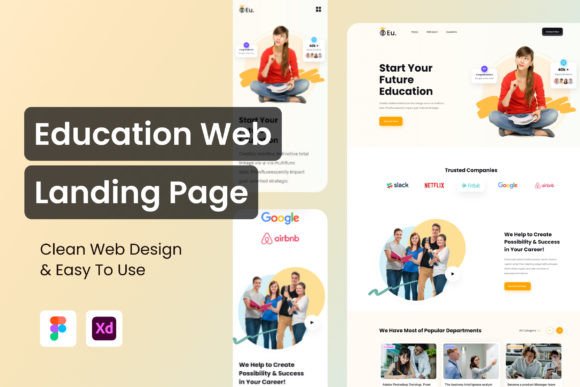
Mastering Education Web Landing Page UI Elements
In the competitive landscape of online learning, the first few seconds a visitor spends on your site determine whether they enroll or bounce. This is where Education Web Landing Page UI Elements become critical. It is not merely about aesthetics; it is about creating a seamless bridge between educational intent and user action. A well-crafted interface does the heavy lifting, guiding prospective students through a narrative that builds trust, showcases value, and ultimately drives conversion. For educators, entrepreneurs, and digital marketers, understanding the architecture of these elements is no longer optional—it is foundational to success.
The Anatomy of a High-Converting Educational Interface
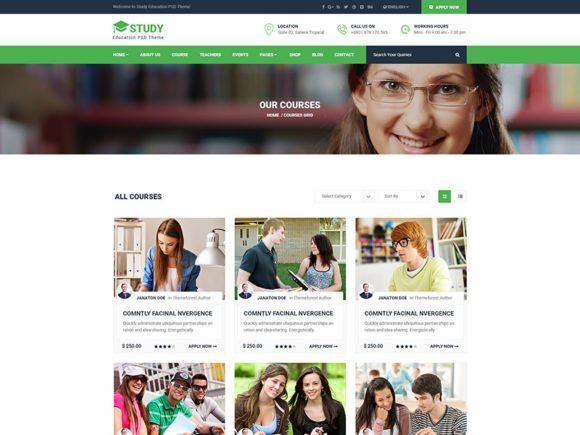
When we discuss Education Web Landing Page UI Elements, we are referring to the specific building blocks that make up the visual and functional experience of a course or institution’s homepage. These components must work in harmony. A chaotic layout confuses users, while a sterile one fails to inspire. The ideal design balances creativity with clarity, ensuring that the hierarchy of information is immediately apparent.
One of the most significant advantages of using a professionally structured template is the organization of layers and groups. In design tools like Figma or Adobe XD, a well-layered file allows for rapid customization. Imagine needing to swap out a hero image to reflect a new semester’s theme or updating the color scheme to match a rebrand. With a clean, creative, and unique template, these tasks take minutes rather than hours. The ability to easily replace pictures by your own in just a few clicks empowers non-designers to maintain a fresh, relevant presence without relying heavily on external agencies.
Precision and Pixel-Perfect Design
Attention to detail separates amateur efforts from professional platforms. A 100 pixel perfect design ensures that every button, text block, and image aligns correctly across various screen sizes. This precision is vital for establishing credibility. If a landing page looks broken or misaligned on a mobile device, users subconsciously question the quality of the education being offered. Modern templates often come with both web and mobile versions pre-designed, acknowledging that a significant portion of your audience will discover your courses via smartphones.
The inclusion of free fonts and high-quality assets further streamlines the development process. By removing licensing hurdles and providing super clear and clean layouts, these resources allow creators to focus on content strategy rather than technical troubleshooting. Whether you are a freelancer building a portfolio for tutoring services or a large institution launching a new degree program, the underlying structure supports scalability.
Practical Applications Across Industries
The versatility of Education Web Landing Page UI Elements extends far beyond traditional universities. Today’s digital economy is fueled by knowledge sharing, and diverse professionals are leveraging these designs to monetize expertise.
- Corporate Training: Human resources departments use these landing pages to onboard employees. A clean layout helps organize complex training modules, making compliance and skill-building less daunting.
- Independent Creators: Bloggers and influencers launching masterclasses benefit from the creative design aspects. Unique visual hooks capture attention in crowded social media feeds, driving traffic to a cohesive sales page.
- Non-Profits and NGOs: Organizations offering free educational resources need to communicate mission and impact quickly. An intuitive hierarchy helps donors and beneficiaries find information without friction.
- Tech Startups: Companies offering certification programs use these interfaces to demonstrate modernity and technical proficiency. A sleek, professional design reinforces the brand’s innovative image.
In each of these scenarios, the core benefit remains the same: efficiency. By starting with a robust foundation, teams can launch campaigns faster. The time saved on design iteration can be redirected toward content creation, marketing outreach, and student support.
Enhancing User Experience and Engagement
User experience (UX) is the silent salesman of the digital world. When Education Web Landing Page UI Elements are optimized, they reduce cognitive load. Visitors do not have to hunt for the "Enroll Now" button or decipher confusing navigation menus. Instead, they are guided naturally through the sales funnel.
Consider the role of visual hierarchy. A well-organized template highlights key value propositions—such as course outcomes, instructor credentials, and testimonials—using size, color, and spacing. This strategic emphasis builds trust. Prospective students are more likely to commit when they feel informed and confident. Furthermore, a responsive design ensures that this positive experience is consistent, whether the user is on a desktop in a coffee shop or a tablet at home.
Engagement is also driven by aesthetic appeal. A professional and creative design stimulates interest. It signals that the educator cares about quality, which implies that the course content will be equally rigorous and well-prepared. This psychological association is powerful in the education sector, where perceived value often dictates purchasing decisions.
Selecting and Implementing the Right Template
Choosing the right design resource requires careful evaluation. Not all templates are created equal, and the wrong choice can lead to technical debt and branding inconsistencies. Here are practical considerations for selecting and implementing Education Web Landing Page UI Elements:
- Check File Compatibility: Ensure the template is available in the software you use, such as Figma or XD. Having access to both 1 Figma File and 1 XD File provides flexibility for different team workflows.
- Review Documentation: Very detailed documentation is a hallmark of high-quality products. It should explain how to customize colors, fonts, and images. Good support reduces the learning curve significantly.
- Assess Customizability: Look for easily customizable files. Can you change the primary color with a single click? Are the components modular? The easier it is to tweak, the more unique your final product will look.
- Evaluate Mobile Responsiveness: Verify that the web mobile version is not an afterthought. It should offer a tailored experience, not just a shrunk-down desktop view.
- Consider Support Quality: High-quality template support is invaluable. If you encounter issues during implementation, knowing that help is available can save your project timeline.
Implementation should begin with a clear content strategy. Before dragging and dropping images, define your key messages. Who is your student? What problem does your course solve? Once these answers are clear, use the template’s structure to highlight those points. Replace placeholder text with compelling copy and stock images with authentic photos of your instructors or learning environment.
The Long-Term Value of Professional Design Resources
Investing in a premium template is an investment in your brand’s longevity. As your educational offerings expand, having a scalable design system allows you to add new courses or landing pages without starting from scratch. This consistency strengthens brand recognition. Students begin to associate specific visual cues with your quality of instruction.
Moreover, the ease of use associated with these tools democratizes high-end design. You do not need to be a graphic designer to create a stunning educational platform. With Education Web Landing Page UI Elements that are intuitive and well-documented, educators can focus on what they do best: teaching. The technology serves the pedagogy, not the other way around.
In conclusion, the digital classroom is built on trust, clarity, and engagement. By leveraging clean, creative, and unique templates, you provide a solid foundation for these values. Whether you are a solo entrepreneur or part of a large academic institution, the right UI elements can transform your online presence. They streamline operations, enhance user satisfaction, and ultimately, drive better educational outcomes. Take the time to explore these resources, customize them to fit your vision, and watch your digital education platform thrive.